
Historical Sites in Rhode Island to Learn the History of the Ocean State
This post contains affiliate links. That means I may earn a small commission at no extra cost to you, if you buy through my site. I appreciate your support of my site.
Known as the birthplace of the American Revolution, Boston’s Freedom Trail brings in history lovers from near and far. Along with Boston, other east coast cities like NYC and Philadelphia receive all the credit for the founding of the country, but the US Constitution is based on principles that were unique to only Rhode Island.
Rhode Island may be the smallest state in the United States by land area, but there is no shortage of things to do in Rhode Island. As another one of the original 13 colonies there are many historical sites in Rhode Island.
The lesser known history of Rhode Island is just as fascinating and important to the early years of the nation. The following are historic places in Rhode Island as well as places to learn the history of Rhode Island. The post is divided into three areas of the state with some additional visiting information at the end.
Historical Sites in Rhode Island
Historic Places in Providence
Start your time in Providence where Rhode Island began! The capital city is full of some of the best historical sites in Rhode Island to learn about the founding of the state and the early merchants who grew the city.
Roger Williams National Memorial
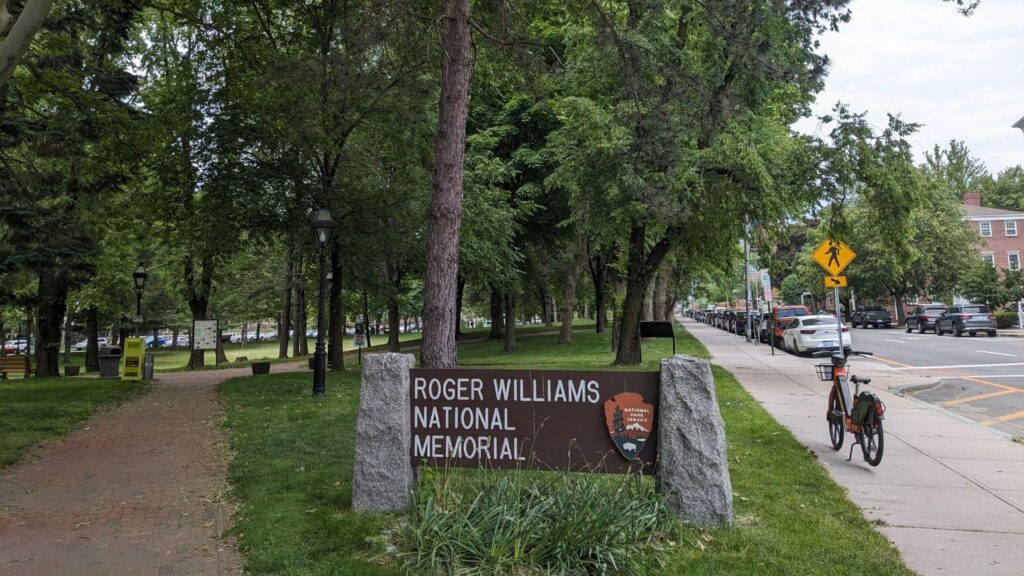
George Washington, John Hancock, Benjamin Franklin, John Adams…..there are so many names that are recognized from the first decades of America’s history. Does Roger Williams ring a bell? I had never heard of the founder of Rhode Island before visiting Providence.
Roger Williams was a very religious man, but he felt strongly about a separation of church and state. As a result he was forced to flee Massachusetts. He came to what is now Rhode Island and began a settlement that was based on the principle of religious freedom, unheard of in the colonies at the time.
A NPS visitor center includes informational signs and a short video. There are restrooms, a water fountain, and a small gift shop as well. It’s worth it to visit when there is a talk outside at the historic well. It’s a great way to learn more about how Roger Williams ended up in the area, why he created the settlement the way he did, and the early years of owning land in Providence.
The walking paths in front of the visitor center are open from dawn to dusk daily. There are a few signs that explain more about Roger Williams and the early years of the settlement.
Roger Williams Park

A park may not be the first place you look for historical sites in Rhode Island, but Roger Williams Park is full of history. Betsey Williams, the great great great granddaughter of Roger Williams, gifted 102 acres to the City of Providence in 1871. The park was built on the land the following year.
Walking paths around the park will take you to many historic monuments, statues, buildings, and trees. Use the online walking trail guides for self-guided walks between .5 to over 3 miles. There is also a handy guide to notable buildings. Some interesting buildings to find include the Casino, which was never used for gambling, and the Seal House, which was actually occupied by sea lions in 1938.
Restrooms at the Carousel Village are open during their hours and for some events.
Rhode Island State House

I’m still not quite sure why, but in New England the capitol buildings are called “state houses”. Self-guided and guided tours of the Rhode Island State House are available on weekdays.
I always enjoy capitol tours, but this one was extra interesting. Maybe I was lucky with the guide, but the tour didn’t feel as scripted as other places where younger interns give the tours. Nothing against them as they have always been very knowledgeable, but I loved the conversational pace of this tour and all the engaging stories. See if you can find the face on governor Thomas Wilson Dorr’s statue!
If you do a self-guided tour don’t miss the State of Rhode Island Colonial Charter Museum. The small, one room exhibit has information and a copy of the original founding charter signed by the English king.
Lippitt House Museum Tour
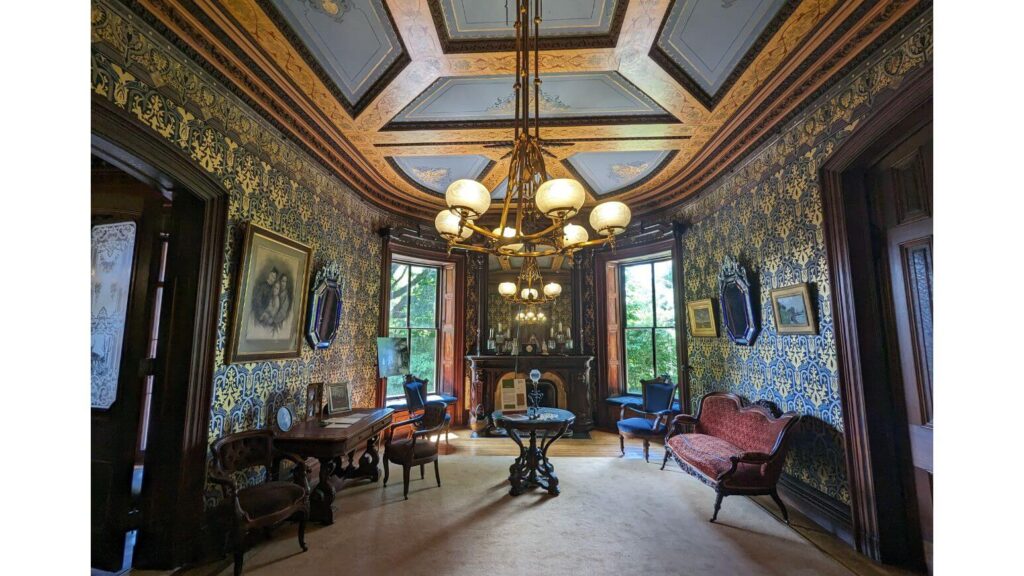
The Lippit family was a prominent family in 19th century Providence. Their former home is open for guided tours. The tour goes to several rooms on the first and second floors. My tour guide was very knowledgeable and engaging.
Many house tours like the Victoria Mansion tour in Portland, focus on the architecture and furnishings of the home. While some of those details were included on the tour, I really enjoyed the stories about the Lippitt family. There was a lot of information about how the family used the home as well as their lives. It’s those kinds of details that makes history come alive.
A restroom is available.
John Brown House Museum
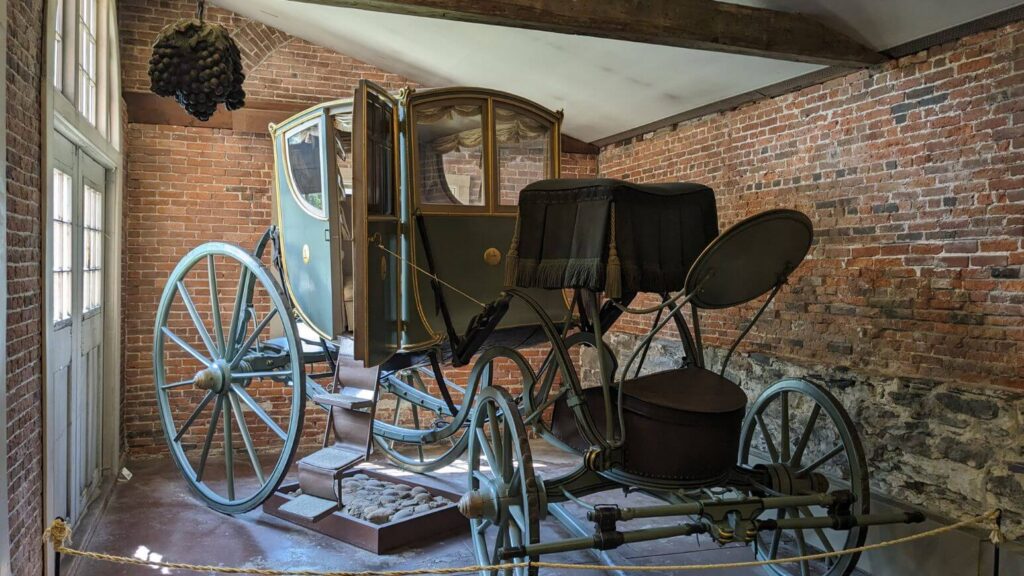
Located along Benefit Street, which is full of historic homes, the John Brown House is one of the most well known. John Brown was a successful entrepreneur who made most of his fortune as a slave trader. His home is one of the historical sites in Rhode Island that showcase how the wealthy lived during the late 1700s.
Unlike the Lippitt Home, the John Brown House has self guided tours. Most of the museum within the historic home is furnished to model the time period John Brown’s family lived there. Informational signs in each room provide some context. There is also an audio guide you can listen to on your phone (there is wifi) with the words written out as well. A friendly docent was available for questions. Although I do like going at my own pace and there were several ways to learn more, I would have preferred a guided tour.
In several rooms there are exhibits on other topics in Rhode Island’s history. These change from time to time and are best visited without a guide. One on mahogany and another on sugar presented a harsh, but important reality on Rhode Island’s huge role in trans-Atlantic slavery.
Restrooms are available.
RISD Museum

The Rhode Island School of Design Museum is an art museum. While it might not seem like it belongs on a list of historic places in Rhode Island, there is actually a lot of history to be learned at art museums. Reading the descriptions will give you the history of many different people, places, and events.
For Rhode Island history, a great place to start is in the Charles Pendleton House. The two story section of the museum is set up as a historic home with period rooms. It’s designed similar to Pendleton’s 1799 Georgian style home in Providence.
I typically spend much longer in a museum than the average visitor, but to help you plan I try to give you a general idea of the size. It’s very hard to tell with the RISD Museum. The museum has a very confusing layout and that’s coming from someone with a great sense of direction. It’s honestly hard to tell how big the museum is! In addition to rotating exhibits, there are also Ancient Egyptian, Greek and Roman, Asian Art, Decorative Arts & Design, and European galleries.
More Historical Sites in Providence
- Providence Athenaeum – A private library that welcomes visitors to explore the historic library that has been lending books for almost 200 years.
- Crime and Cuisine Food Tour – This tour of Federal Hill, the Italian neighborhood, sounds really cool. Not only do you try the best Italian foods, but you also learn about the history of crime and corruption in the city.
- Federal Hill Heritage Center at Italo American Club – Learn more history of Italians in Federal Hill at the exhibits here.
Historic Places in the Blackstone River Valley National Heritage Corridor
Boston might be the birthplace of the American Revolution, but the Blackstone River Valley National Heritage Corridor is the birthplace of the American Industrial Revolution. Before 1790 the valley was farmland like much of the country. One mill along the river kickstarted the growth of mills and the age of industrialization. The valley and the country were soon to be changed forever.
The Blackstone Heritage Corridor includes 25 Massachusetts and Rhode Island cities and towns along 46 miles of the Blackstone River. While Providence is included in this list, the following suggestions are for the area north of Providence. Many of the historical sites in Rhode Island are within this part of the state. Blackstone River Valley is also a NPS National Historical Park.
Blackstone Valley Visitor Center
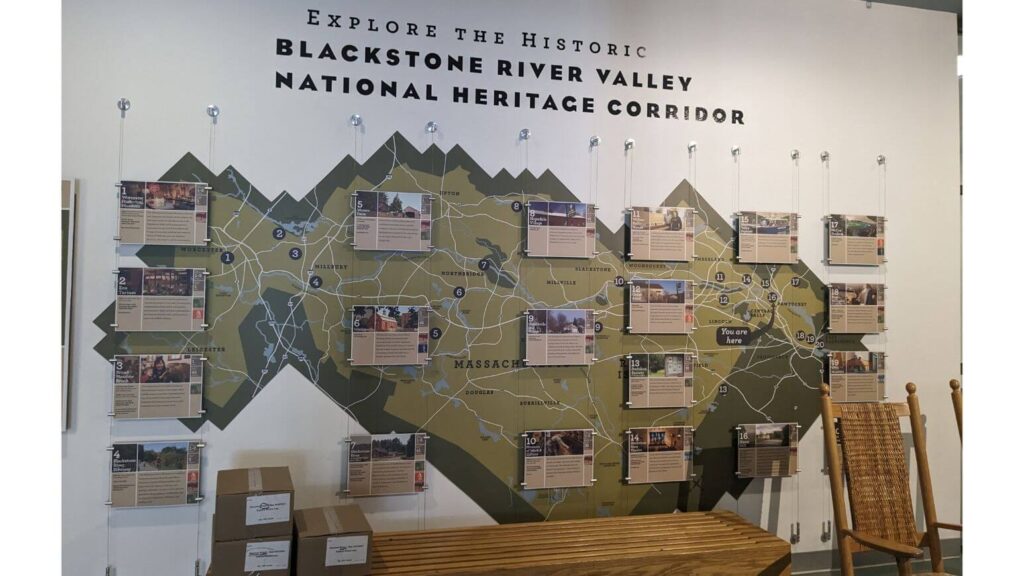
Start where it all began in Pawtucket. Hundreds of brochures and informational guides will help you plan the rest of your time in the Blackstone Valley. A large floor map helps to orientate you to all the historic sites in Rhode Island within the valley.
The visitor center has free exhibits covering the history of the Blackstone Valley including the earliest Native people, the first years of industry, the different waves of immigration, and more recent Blackstone River clean ups. Don’t miss the short video that delves into more of the area’s history.
Restrooms and water fountains are also available. Stamp your NPS passport book at the main desk.
Old Slater Mill
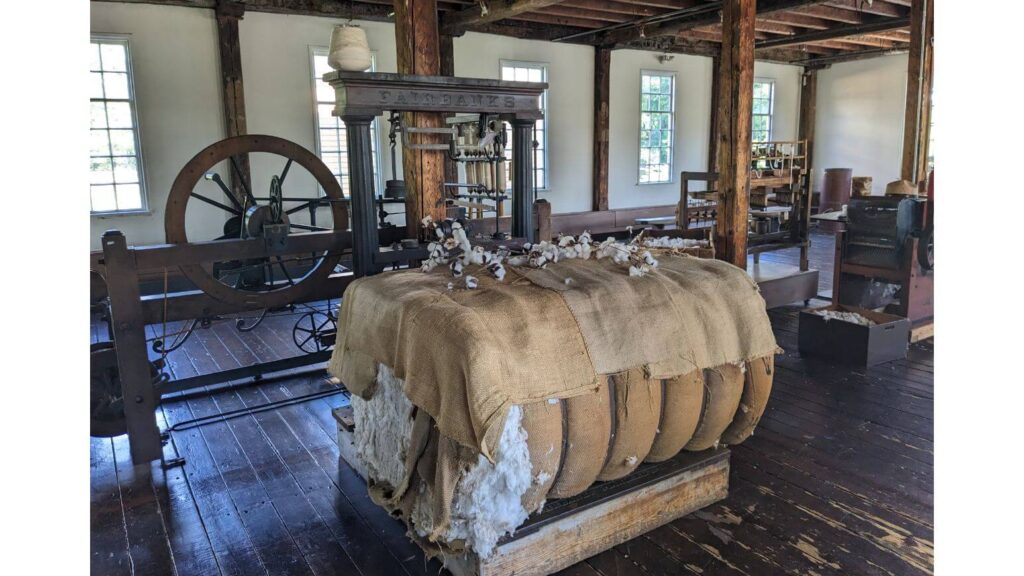
Next, head across the street to the Old Slater Mill, the first cotton spinning mill in America. The success of this mill led to all the other mills being built in the Blackstone Valley.
The visitor center has a few informational signs and a short video. It’s definitely worth visiting when there is a free guided tour. Not only is it your only opportunity to go into the part of the mill with original machines, but you’ll learn the full history of Samuel Slater. While the mill could have been placed along many east coast rivers, you’ll understand how it ended up in Pawtucket!
Shout-out to my fantastic guide Owen who did an impressive job bringing the history to life. The tour was about the building and machines, but even more so about Samuel Slater, the people who worked for him, and the start of factory life across the country. Slater Mill was definitely one of my favorite historic sites in Rhode Island.
The visitor center has restrooms, water fountains, and helpful rangers. Like all sites managed by the NPS, you’ll want to bring your passport book for a stamp.
Blackstone River

What better way to understand the history of the Blackstone River than to experience it for yourself. Boating and kayaking are allowed on the river. The swift moving river drops about 10 feet per mile. As there are 18 dams across the 46 miles of river, it’s best to take a guided boat tour or kayaking tour.
Not only is it safer to take a guided tour, but you’ll also learn a lot more about the history and how the Blackstone River became the “hardest working river in America”. I signed up for a guided group kayak tour with Blackstone River Expeditions. Throughout the tour we saw and learned about many of the historic mills along the river that made this region famous.
For a more relaxing experience, book a river tour on a nature and heritage tour boat. The 50 minute cruise includes binoculars and nature guides for exploring the scenery and wildlife.
Both tours begin from the boat landing in Central Falls. There is a port-a-potty available to use before and after your time on the water.
More Historical Sites in the Blackstone Valley
- Museum of Work and Culture – I wish I would have had time for this museum in Woonsocket. It tells the story of immigrants who came to the mill towns to work.
- Captain Wilbur Kelly House Transportation Museum – While many historical sites in Rhode Island in this region focus on how the river was used for industrialization, this museum in Lincoln is all about the river’s role in transportation.
- Great Road Heritage Campus – five historic buildings are along this road in Lincoln. They include Hearthside House Museum, Hannaway Blacksmith Shop, Pullen’s Corner Schoolhouse, Moffett Mill, and Arnold House. Check the calendar of each to see when they are open. Regularly scheduled tours of the two houses can be booked. Classes are available at the Blacksmith Shop.
Historic Places in Newport
We have covered historical sites in Rhode Island focused on the founding of the state and the American Industrialization Revolution. Newport’s history is quite different. The summer resort town is known for its Gilded Age mansions and history of sailing.
Museum of Newport History
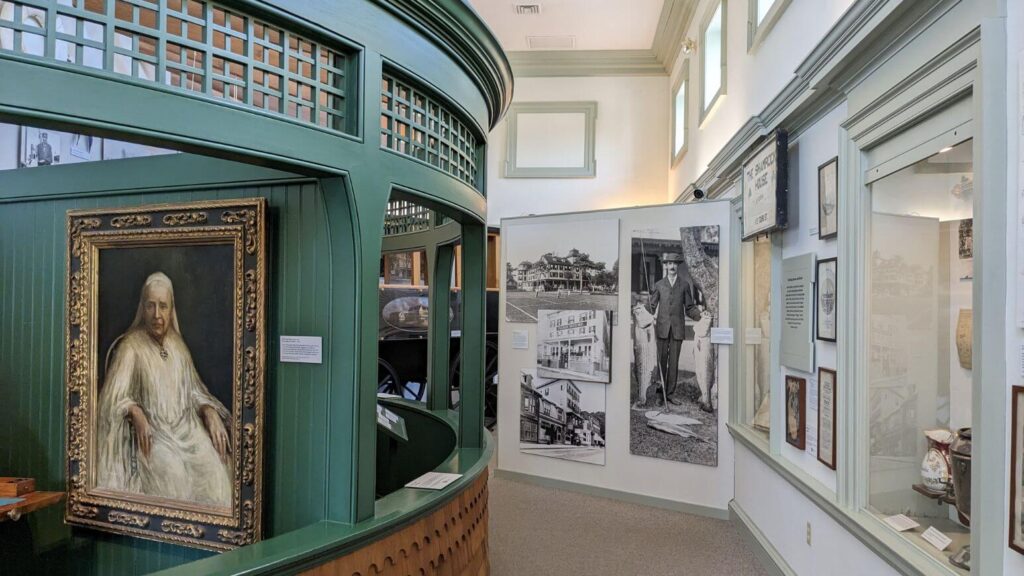
The Museum Of Newport History is a great place to start as the exhibits cover the chronological history of the city. General information about the earliest settlers in Newport alongside stories from specific people and families is shared first. A section on the American Revolution explains Newport’s role in the conflict. While other New England cities were growing with the age of industrialization, Newport took a very different path. You’ll learn how Newport became a “summer colony” full of summer cottages for the wealthy. Also how it became known for recreational activities including yachting and sailing.
While small, the museum is packed with information and artifacts such as Benjamin Franklin’s printing press. A gift shop and restrooms are located in the building, the 1762 Brick Market.
Several walking tours begin from the museum and include museum admission. The Colonial History tour provides a chronological history starting from pre-Colonial days and continuing with the lives of Newport residents, history of buildings, and the most significant events in the last 400 years. Newport and the American Revolution focuses on Newport’s role during the famous rebellion between the loyalists and the patriots. The Revolutionary War to the Gilded Age is covered on the Golden to Gilded Age tour.
Newport Mansions and Gardens
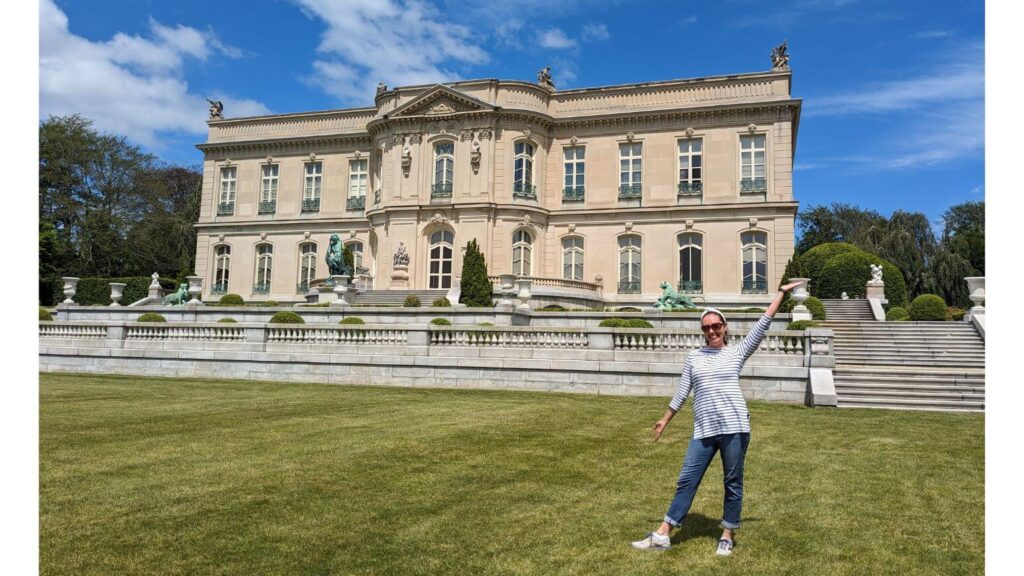
Along with New York, Newport was at the heart of the Gilded Age from the late 1870s to early 1900s. While much of the country was suffering from extreme poverty, a small group of wealthy tycoons and their families were living lavish lifestyles. They built opulent mansions that were laughably called “summer cottages” along Bellevue Avenue in Newport.
Some of the best historical fiction books set in NYC take place during the Gilded Age. As an avid historical fiction reader I love being transported back to the age of excessive parties and extravagant lifestyles. It was so exciting to visit four of these mansions that served as settings to some of my favorite “characters”. Of course these were real life high society families that summered in Newport. I’m not a TV watcher, but fans of HBOs Gilded Age I’m sure will have the same excitement as I had.
The Preservation Society of Newport County was created in the mid 1900s to save, restore, and preserve the mansions that had fallen into decline. They now run 11 properties including The Breakers, Marble House, Rosecliff, The Elms, Green Animals Topiary Garden, Château-sur-Mer, Kingscote, Isaac Bell House, Hunter House, Chepstow, and The Breakers Stable & Carriage House. I described the first five, the ones I visited, below.
The Breakers
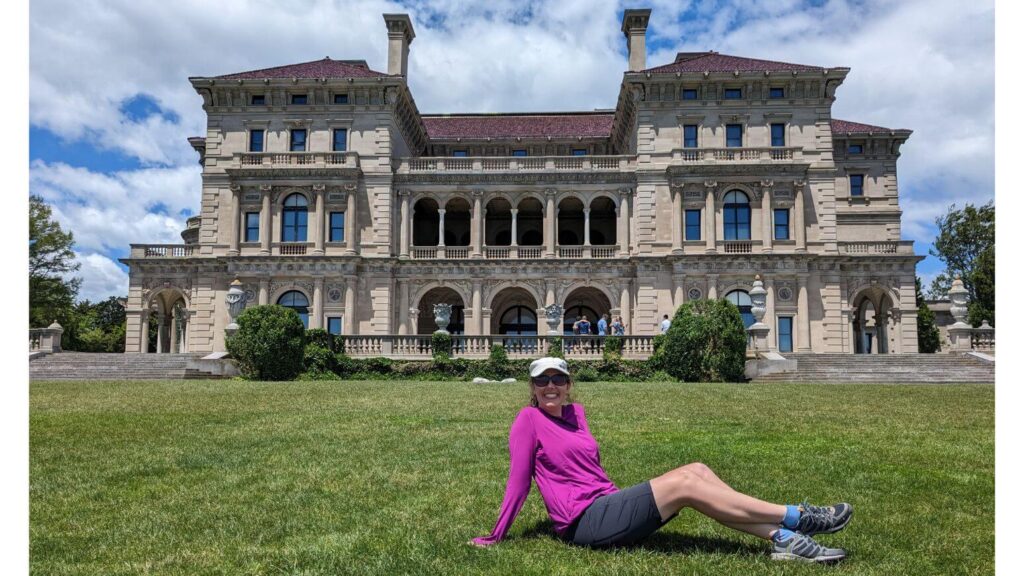
Any history lover will appreciate exploring these mansions that serve as time capsules to this time period. The Breakers is the most well known and busiest of the summer cottages. After seeing the gigantic size you’ll understand why the name is quite comical.
The home was built for Cornelius II Vanderbilt and his wife Alice Vanderbilt. The Vanderbilts made their fortunes in steamships and railroads. Not a penny was spared to build the current 70 room mansion in 1893. With 20 of the rooms being bathrooms and Mrs. Vanderbilt having four clothes closets, I wouldn’t mind living there!
Marble House
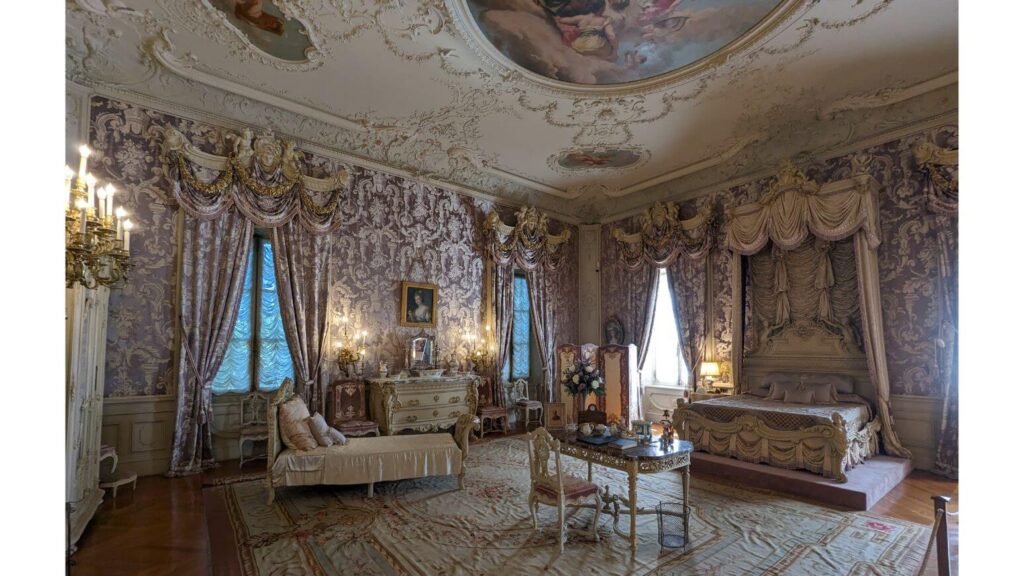
Cornelius II’s brother, William K Vanderbilt, also had an impressive mansion on Bellevue Avenue. William gave his wife Alva Vanderbilt Marble House, or the funds to build and design Marble House, for her 39th birthday. Not surprisingly Marble House is covered in marble. Alva took full advantage of that birthday present!
Alva and her daughter Consuelo are some of the Newport ladies I have enjoyed reading the most about. It was fascinating to see their summer home and learn more about their lives. American Duchess is an intriguing book to read after visiting Marble House. I could easily imagine the scenes taking place in the many rooms of the mansion.
The Elms

Edward Julius Berwind might not be as well known as the Vanderbilts, but he had a fortune and a Bellevue mansion to match. As the world’s largest individual owner of coal mines at the time he was able to keep up with Newport’s high society.
Unlike most of the Newport mansions The Elms backyard does not lead out to the ocean. Despite the lack of an ocean view, the gardens are elaborate with fountains, pavilions, sculptures, and a variety of trees.
Rosecliff
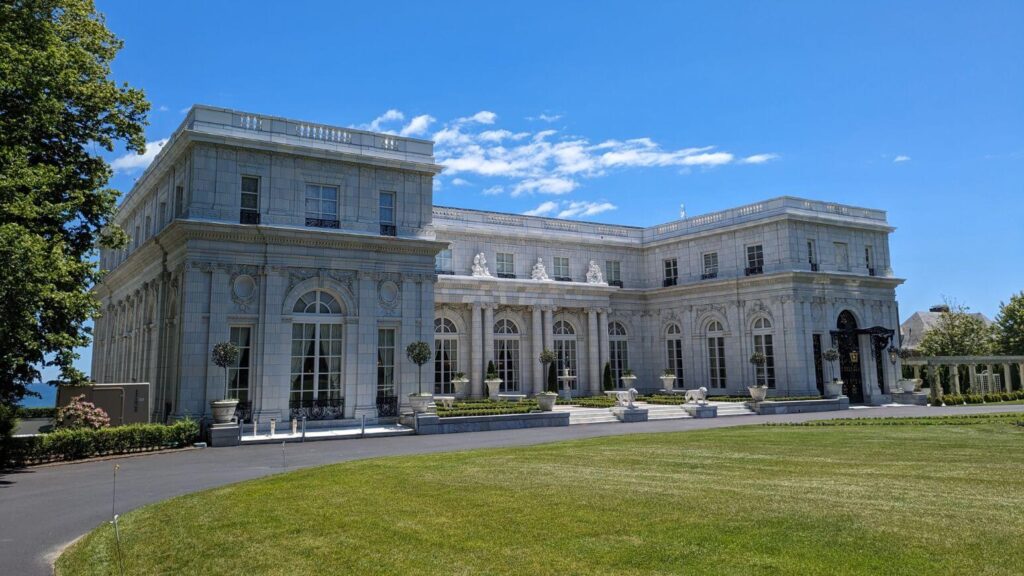
This mansion was home to Theresa Fair Oelrichs. As a Nevada silver heiress she was new money and had to have a gorgeous summer cottage in Newport to pave her way into Newport’s social hierarchy.
The mansion is currently available for weddings and other events. Out of the four mansions I toured, this one had the least amount of public rooms available to be toured. They are still quite impressive and I found the audio guide here to focus more heavily on the people who lived here and the different owners who called it home. There is also a small museum exhibit upstairs that is included in the admission.
Green Animals Topiary Gardens
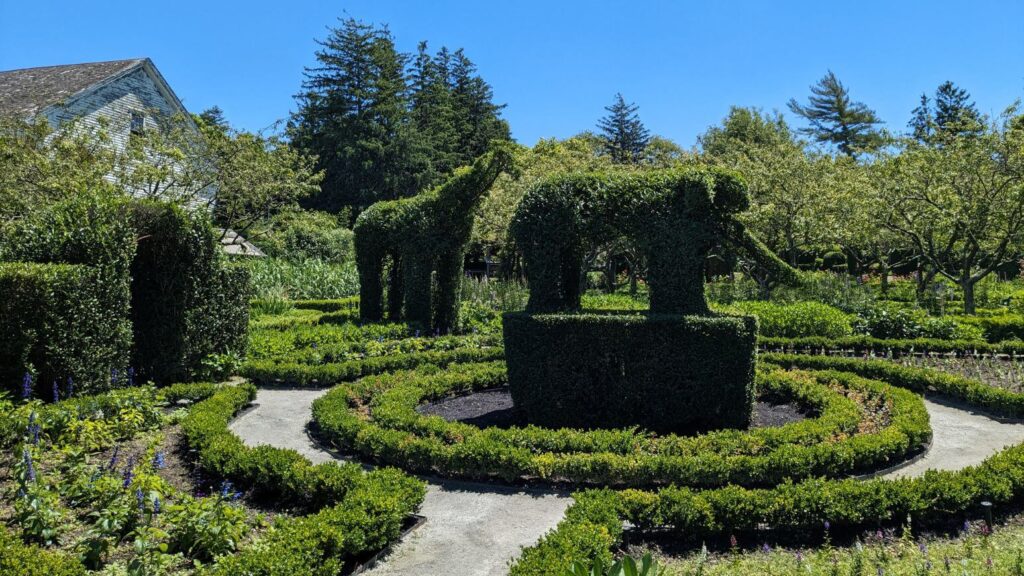
Located north of Newport in Portsmouth, Green Animals is the oldest topiary garden in the US. Thomas E Brayton owned the country estate and hired Joseph Carreiro and his son-in-law George Mendonca to garden the property. They created the gardens and the topiaries in the early 1900s.
It’s fun to go on a scavenger hunt with the provided brochure. See how many of the animals you can find! It’s a beautiful place with nice pathways, but it is quite small. It’s a pricey visit if you’re paying full price without a multi-property pass.
The gardens overlook Narragansett Bay. You’re encouraged to enjoy a relaxing picnic on the grassy hill or on the Adirondack chairs near the original Brayton house.
Self-Guided Tours
Visits to The Breakers, The Elms, Marble House, Rosecliff, and Château-sur-Mer are by self-guided audio tour. You need to have your own device and headphones. Download the app and the audio tours for all the places you will visit ahead of time. There is wifi in all the mansions, but the tours work without wifi if downloaded ahead of time.
There are paper handouts at the entrance of each property as well. Despite what a docent said, they are different from the audio tour. I’m a reader and enjoy reading every word at museums, but the audio guides are much better. The audio is fairly engaging, some sections more so than others. There is a recommended path you need to follow in each mansion and the audio follows the same route with additional segments to listen to in some rooms. As those often contained stories about the people and life in the homes, I usually found those the most interesting.
With the audio guides not only are you able to look around while listening, it’s also less distracting than reading as many people don’t have headphones and play their audio loudly. Be aware that your phone battery will drain very quickly if you are visiting multiple properties in one day. With the price of admission they really should do guided tours or at least provide the audio devices with headphones. The current system is not great.
Green Animals Topiary Garden, Isaac Bell House, and Kingscote are also self-guided tours, but there are no audio guides.
Guided Tours & Special Events
Hunter House and Chepstow offer guided tours and are included in the regular ticket pricing.
There are specialty guided tours at some of the properties. They do not include general admission to the mansions and typically cover a different part of the home. These require an advanced booking and an additional cost.
Seasonal events also take place throughout the year.
Tickets
Tickets can be purchased by one property, two properties, or three properties. There is also an all access pass which includes admission to all of the properties. Properties do not need to be visited on the same day.
If you’re planning to visit more than one property it’s definitely worth buying one of the passes. It’s best to buy online as not all properties sell tickets on site. It wasn’t cheap to build these mansions and it’s not cheap to visit them more than a 100 years later!
Restrooms
Restrooms are available with paid admission at all properties. They are typically in the gift shop which is at the end of the tour, but you can access them before the tour by going through a side door (or during the tour if needed).
The Museum of Sailing and National Sailing Hall of Fame
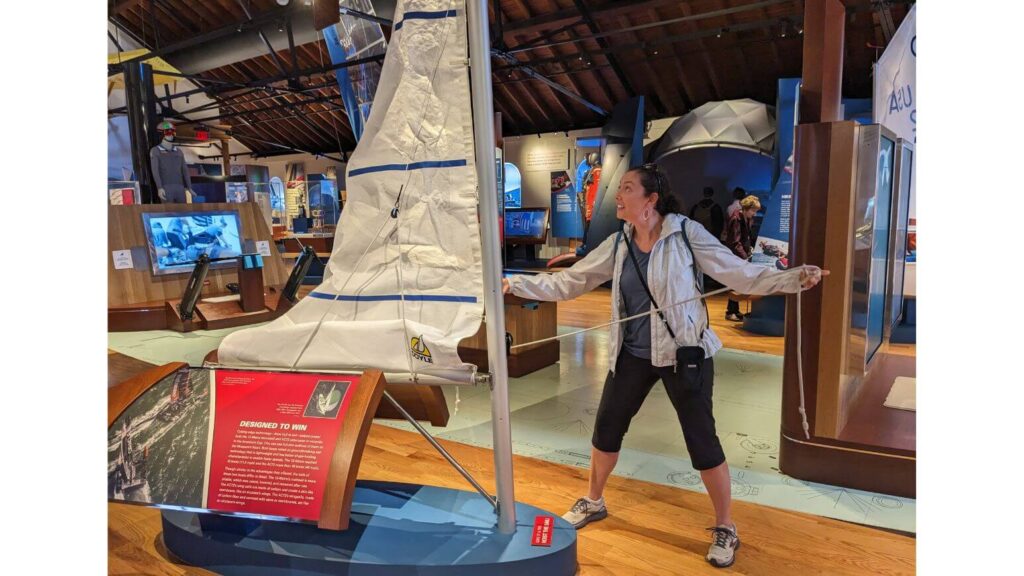
As a colonial seaport in the 17th century, Newport has a long history of sailing. During the Gilded Age, Newport’s elite needed something to do and sailing and yachting were some of the most popular summer activities. The America’s Cup, the oldest international sailing competition, has been held in Newport 12 times.
The exhibits at the Museum of Sailing will tell you everything you have been wondering about sailing and more information that you didn’t even think to ask! Thanks to the interactive exhibits you’ll be able to try your hand at raising a sail, tying knots, moving a tiller to steer, and more required sailing tasks. It’s a great place for the whole family to learn some history and have fun.
More Historical Sites in Newport
- International Tennis Hall of Fame – Tennis also has a long history in Newport. It was another one of the wealthy’s favorite activities during the Gilded Age. The interactive museum at the Hall of Fame shares the history of tennis from around the world.
- Museum of Newport Irish History – exhibits focus on Irish immigration to Newport County.
- Touro Synagogue National Historic Site – tour the synagogue and learn why it is a symbol of religious freedom.
- Fort Adams State Park – Take a self-guided or guided tour of the coastal fort.
Rhode Island Visiting Information
Where else can I visit near Rhode Island?
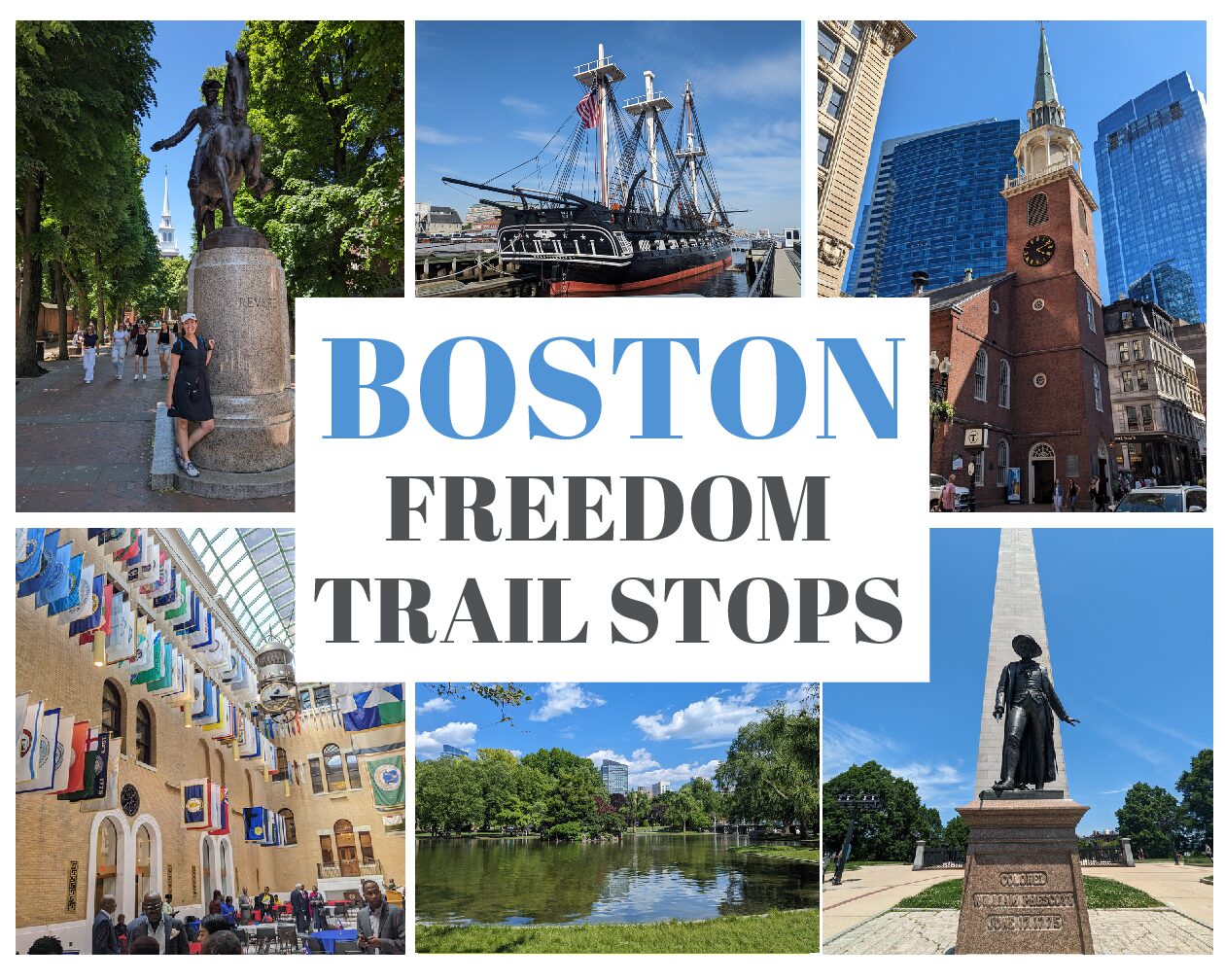
There are plenty of things to do right in the state. You can easily spend a week or more exploring all the historical sites in Rhode Island. A longer New England road trip is also an option. Spend 10 days in Maine and then a few days in Boston visiting all the Freedom Trail stops before continuing on to Rhode Island.
In a little over 3 hours you can reach New York City by train. New York City is full of things to do including many historical sites and history museums.
How do I get to Rhode Island?
Tucked in between Massachusetts and Connecticut, Rhode Island is a short drive from both states.
TF Green International Airport in Warwick (outside of Providence) has non-stop flights to many cities on the east coast and some to the rest of the country.
Greyhound stops in Providence, but I prefer train travel. A commuter rail line runs between Boston, MA and North Kingstown, RI. It’s an economical and reliable way to reach many cities including Pawtucket, Providence, and Warwick. Use the MBTA mTicket app to purchase tickets. I was traveling without a car and took the commuter train from Boston to the TF Green Airport stop in Warwick. The seats aren’t quite as comfortable as Amtrak, but the commuter train was perfect for me due to the stop locations. There are restrooms on board. Without wifi I activated my ticket before arriving and left the screen up to show when on the train.
Amtrak is more expensive, but there are Rhode Island stops on the Acela and Northeast Regional lines. From Newport I took a Rhode Island public bus to Kingston and rode Amtrak to New York City.
How do I get around Rhode Island?
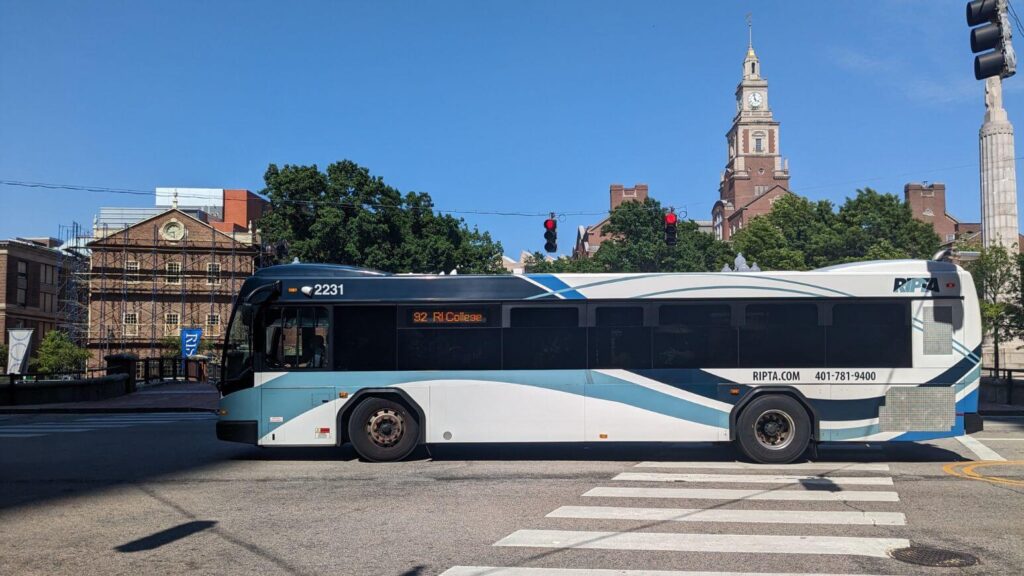
Driving is an option in Rhode Island, but be prepared to pay for parking in Newport and downtown Providence. Also during peak times it can be hard to find parking. Lyfts and Ubers are available.
In addition to the commuter train line, Rhode Island has public buses. With only one system for the entire state it’s very easy to use. Download the RIPTA app and load money into your account. I would leave the app open in one of my phone browser’s all day and even when I was boarding a bus without wifi it would still work. You can also pay bus fare with cash or a Wave card, but the app saves you the time from finding exact change and buying a transit card.
As of writing it is $2 for one hour or $6 max a day. It’s the only US state that I know of that you can get around the entire state for only $6! During the first part of my trip I took buses daily between Providence or Pawtucket and Warwick. I rode buses all the way from where I was staying in Warwick to my accommodations in Newport. It took almost two hours, but it was easy…..other than the rainstorm that conveniently started as I was transferring buses with all my luggage!
In Newport I stayed about a 10 minute bus ride north of downtown. It took about the same amount of time as it would to drive, but I didn’t have to worry about finding or paying for parking. A free trolley bus runs from downtown to the mansions on Bellevue Ave.
Finally I took another almost 2 hour journey from Newport to Kingston to pick up the Amtrak train to NYC. It was one stop shorter than starting in Providence and saved me backtracking.
As long as you time the buses correctly, they are a great option if you would like to save money when getting around Rhode Island.
Where should I stay in Rhode Island?
As the state is so small you can base yourself in one city, if you have a car. All of the historical places in Rhode Island that I included in this post are less than a 45 minute drive from Providence.
If you don’t have a car or want to reduce drive times, I recommend staying in Providence and Newport.
Providence
Residence Inn Providence, Renaissance Providence, Omni Providence, and Aloft Providence are all highly rated hotels located downtown. They are within walking distance of most of the historic places in Providence mentioned above.
Warwick

Hotels are quite a bit cheaper in Warwick, which is only a 15 minute train ride from Providence. It’s actually quicker to go between the two cities by train than by car. There are also plenty of buses.
Hyatt Place Warwick/Providence Airport was the perfect place to stay for so many reasons. Location wise it is next to the commuter train and the airport. There are also several bus stops nearby. Plus, the hotel has a free shuttle that goes within a three mile radius of the hotel.
The hotel itself is very nice. Hyatts are usually great about giving your preferred room location if you have status. Read more about Hyatt status in my hotel savings post. I appreciated my quiet top floor corner unit! I wish the rooms had a microwave, but there is a communal microwave that can be used at any time in the breakfast area. I enjoyed doing a workout and relaxing in the heated indoor pool. Every morning I started out my day with a full hot breakfast.
Newport
Initially I was going to stay in downtown Newport to avoid needing transportation each day, but the prices were steep. I consider some of the more budget friendly accommodations like Bellevue Manor, Inn on Bellevue, or Admiral Farragut Inn.
Some other highly rated places in downtown Newport include Hydrangea House Inn, Marshall Slocum Inn, The Attwater, and Harborside Inn.
Middletown

I decided to book at the Howard Johnson in Middletown instead of staying in downtown Newport. It was located directly on the main road that the bus stops coming from Providence and going to Newport. It was super convenient and I saved a good chunk of money compared to booking a basic hotel downtown without breakfast or any amenities.
The Howard Johnson has breakfast included each morning. It was a pretty carb heavy breakfast, but I always appreciate when breakfast is included. The hotel was very clean and modern. Rooms had a bit of a light blue and white nautical theme. It didn’t seem like your typical Howard Johnson. The staff was very nice and stored my luggage on my last day including putting food into their personal refrigerator.
Where should I eat in Rhode Island?

You can’t take in all the history of the Rhode Island historical sites without a full belly!
Warwick
Usually New American is my last cuisine choice and was this time too, but Iron Works was a short walk away from my Warwick hotel. I’m so glad I gave it a try and you definitely should too if you’re staying in Warwick. The shrimp and cornbread appetizer was incredibly tasty. It’s enough for a full meal if you aren’t looking for a huge dinner.
Providence
I ate at three different Asian restaurants in Providence. What can I say, I like what I like! Wok and Pot and Den Den Café Asiana were both great Korean restaurants. Forget McDonalds, there are so many other fast casual options these days. Cilanter is a counter serve Indian fusion restaurant with a lot of healthy, but flavorful choices.
The Federal Hill neighborhood is full of Italian restaurants.
Newport
Order seafood when dining in Newport. New Bedford Fisherman’s Cod with garlic bread was a great choice at Brick Alley Pub and Restaurant. The American restaurant has plenty of non-seafood options as well.
The Mooring Seafood Kitchen & Bar was great for seafood and ambiance. I enjoyed watching sailors in the marina. Luke’s Lobster is another top spot for seafood. I mentioned the sit down restaurant in my Maine itinerary. Bowen’s Wharf has a pick up window for the same great lobster rolls. As I had a lot of lobster in Maine I went with the shrimp roll which was excellent as well.
For a healthy breakfast or lunch add Drift Cafe to your list. Not only did the Good Stuff bowl taste great, but I felt great eating it too. All the dressings are house-made and you can taste it.
Now go out and explore the ocean state! If I helped you discover the historical sites in Rhode Island and the best places to learn the history of the state, please consider supporting me by Buying Me a Coffee. It helps me write these detailed, unbiased guides for free!
More About New England
- The Best Hikes in Acadia National Park (Maine)
- The Best Indoor and Outdoor Things to Do in Portland (Maine)
- The Only Maine Road Trip You Need (Maine)
- All of the Historic Boston Freedom Trail Stops (Massachusetts)
Pin IT!!

You May Also Like

A Hiker’s Southwest Colorado Road Trip

The Best Indoor and Outdoor Things to Do in Tucson